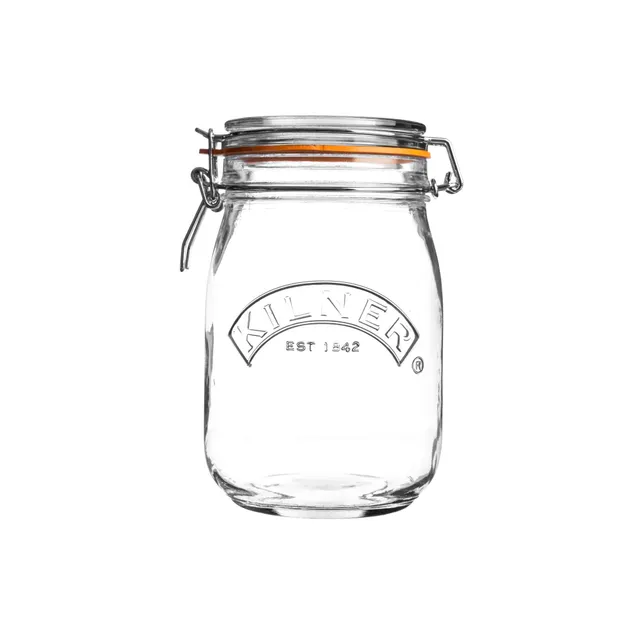
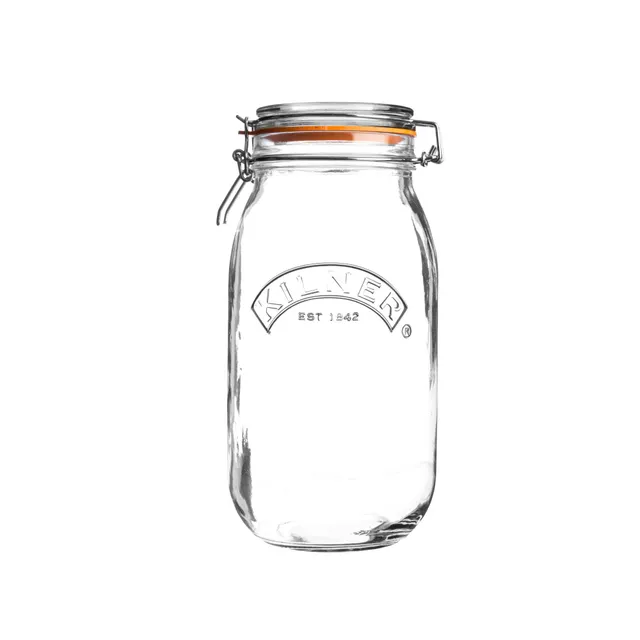
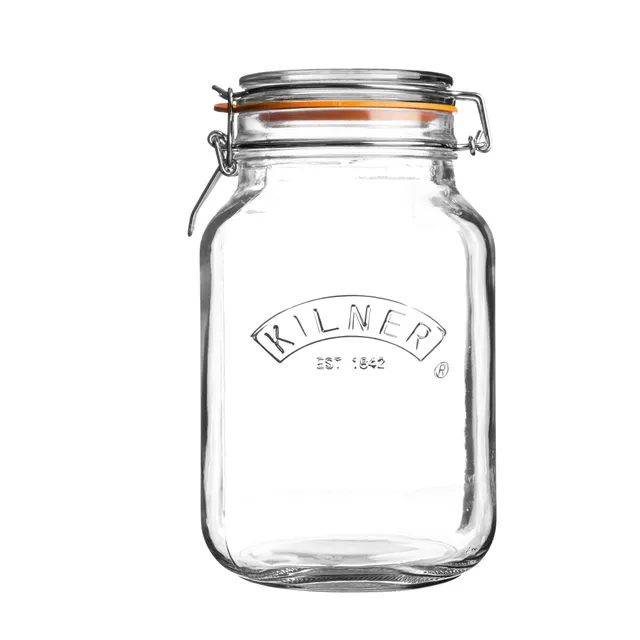
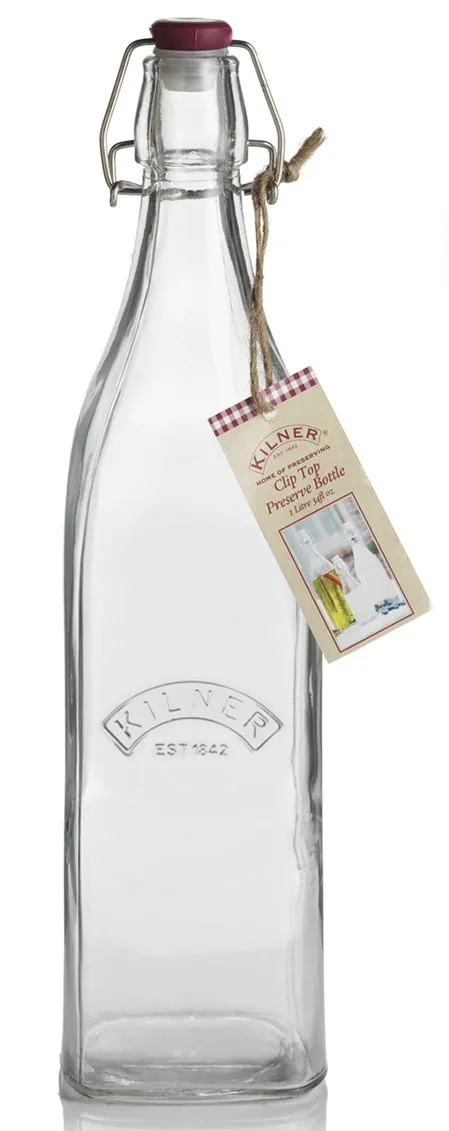
$20.00
We will hold your cart for 15:00.
So you've just got your first Kilner jar – maybe a classic clip-top, maybe a sleek square bottle – and you're wondering what to do with it. You're not alone. Kilner jars have been a staple in British kitchens since 1842, and for good reason: they're versatile, airtight, and built to last. But for a beginner, the range of options and the proper techniques might feel a bit overwhelming. This guide will walk you through everything you need to know, from choosing the right jar to sealing it correctly, and even troubleshooting common issues. By the end, you'll be using your Kilner jars like a pro.
Kilner jars aren't just any glass jars. They're designed with a few key features that set them apart:
Whether you're new to preserving or just want stylish storage for your pantry, Kilner jars are a smart investment.
The most common use for Kilner jars is dry food storage. Their airtight seal keeps cereals, pasta, flour, and sugar fresh and free from pantry pests. Here's how to get the best results:
For extra freshness, you can vacuum-seal with a handy accessory, but the standard clips work perfectly for most uses.
Yes, Kilner jars can be used for water bath canning, provided you follow safety guidelines. Many beginners wonder if clip-top jars are safe for canning – the answer is yes, but you need to ensure you use the correct method.
Water bath canning: Kilner clip-top jars are safe for high-acid foods like jams, jellies, pickles, and fruit preserves. The key is to use a proper water bath canner and process for the recommended time. The rubber seal and clips will form a vacuum as the jar cools, ensuring a safe seal.
Pressure canning: While some sources say Kilner jars are not suitable for pressure canning due to temperature differences, others report success. To be safe, we recommend using jars specifically designed for pressure canning. If you attempt it, ensure the jars are in good condition and follow your pressure canner's instructions carefully.
Always check for cracks or chips before canning – even a tiny imperfection can cause the jar to break.
The seal is the most critical part of using a Kilner jar. Here's a step-by-step guide to ensure a perfect seal every time:
To test the seal on a cold jar, press the middle of the lid – it should be firm and not move. If it clicks up and down, the jar isn't sealed properly.
The glass jars are dishwasher safe, but the lids and rubber seals are not. The heat and detergent can degrade the rubber and damage the clips. Always hand wash the lid and seal in warm soapy water and dry thoroughly before reassembling. This will extend the life of your jars and maintain a proper seal.
Also, avoid using abrasive scrubbers on the glass, as they can cause micro-scratches that harbor bacteria.
You might be wondering how Kilner jars compare to Mason jars. Both are used for canning and storage, but they have distinct differences:
| Feature | Kilner | Mason |
|---|---|---|
| Sealing mechanism | Clip-top with rubber seal | Screw-on lid with metal disc |
| Classic look | Embossed logo, vintage feel | Plain glass, utilitarian |
| Reusability | Seals can be replaced | Lids need frequent replacement |
| Pressure canning | Not recommended | Often designed for pressure canning |
| Price | Generally higher | More affordable |
Kilner jars offer a more elegant design and are perfect for storing dry goods or as serving pieces, while Mason jars are more straightforward for traditional canning. Choose based on your needs – or mix and match!
Kilner jars are not just for storage. Here are some beginner-friendly ideas:
Even experienced Kilner users run into problems. Here are solutions to common questions:
Check the rubber seal – it may be worn or perished. Replace it if needed. Also, make sure the seal is wet before closing, and that the clips are fully engaged.
Yes, Kilner jars are designed to withstand high temperatures, but always pre-warm the jar with hot water to avoid thermal shock. Never place a cold jar into boiling water.
Yes, Kilner jars are freezer safe, but leave at least an inch of headspace to allow for expansion. Also, avoid filling them to the brim with liquids.
Fill the jar with warm water and a tablespoon of baking soda, let it sit overnight, then rinse. For stubborn smells, use a mixture of vinegar and water.
One of the great things about Kilner jars is that parts are replaceable. You can buy replacement rubber seals, clips, and lids. For example, for the 3L swing-top jar, you'll need a seal that fits that size. Check our collection for genuine Kilner accessories to keep your jars in top condition.
With this guide, you're well on your way to making the most of your Kilner jars. Whether you're preserving, storing, or just getting creative, these jars are a wonderful addition to any kitchen. Start with a basic jar, practice your sealing technique, and soon you'll be a Kilner expert. Happy jarring!
Orders over $45.00 ship free. Otherwise, shipping is $8.00.
Hassle-free returns
SSL encrypted checkout
100% genuine products
Find top-brand coolers and ice packs that keep food fresh for hours, with free shipping over $45.
Email: support@coldcache.shop
Address: 1428 Market Street, Suite 204, San Francisco, CA 94102, United States